Wednesday, September 18, 2019

Holy Land Pilgrimage Journal (Day 7)

Wednesday, 18th September 2019


Today, our pilgrimage took us into the Old City of Jerusalem via the Palm Sunday route from the 'Mount of Olives'. We commenced our journey at the ‘Church of the Pater Noster’ located on the Mount of Olives, which is the traditional site where Jesus taught the disciples how to pray (the Lord’s prayer). As we moved through this church, the walls were lined with renditions of ‘The Lord’s Prayer’ in almost every language you could think of. It was quite a blessing listening to different cultural groups gather around their particular language board to recite the prayer in their mother tongue. I was somewhat disappointed not to find one written in Pijin English. However, I was able to photograph the Indonesian board for our dear friends Majors Nyoman & Suni Timonuli.

“Dadi bong mifala long heven,
Nem blong yu nao hemi mas stap bikfala.
Yu mekem kingdom blong yu fo kam.
Yu mekem wanem yu laekem nomoa
Fo hapen long disfala wol,
Olsem wea hemi hapen long heven.
Yu givim kam kaikai wea hemi
Fitim mifala fo tude.
Yu fogivim mifala long olketa
Ravis samting wea mifala duim,
Olsem mifala tu forgivim olketa
Hu I duim olketa ravis samting long mifala.
Yu no letem enikaen samting
Kam lo traem mifala,
Bat yu sevem mifala from paoa blong seitan.”

(Matthew 6:9-13, Solomon Islands Pijin Bible)

As we continued along our journey, we got our first glimpse of the Holy City, which was stunning. Seeing photos online is one thing but standing on the Mount of Olives looking down on Jerusalem is quite another. Next stop was the ‘Dominus Flevit Church’. This is the traditional site where Jesus wept over Jerusalem on His way towards His ‘Triumphal Entry’ into the Holy City.

Further down the Mount of Olives was the 'Garden of Gethsemane' and the 'Basilica of Gethsemane'. As spectacular as the beautifully decorated basilica was, I was more drawn to the olive tree lined garden. The arid garden connected me more with the anguish of Christ than the ornate church sanctuary. There in the garden among the 2000 year old olive trees, I imagined myself waiting and watching with the disciples while Jesus prayed. This garden is truly a sacred space that exposed the intersection between Christ’s humanity and divinity.


“Lest I forget Gethsemane

Lest I forget thine agony

Lest I forget thy love for me

Lead me to Calvary.”


Finally, as we left the Mount of Olives, we entered the Old City of Jerusalem through the Lion’s Gate. There was a tangible sense of excitement and anticipation as we entered the ancient walls of Jerusalem. I even think someone in our group started singing, ‘Jerusalem, Jerusalem’. Our first stop inside the gate was the 'Pool of Bethesda' where Jesus healed the paralysed man who begged by the pool daily. The stone infrastructure of this pool that was still standing was quite amazing. Alongside the Pool of Bethesda is the 'Church of Saint Anne'. This beautiful church offered extraordinary acoustics which have become quite an attraction for touring groups to assemble at the sanctuary to sing. The sound of music pouring out of this church really is something to hear. We even waited our turn before assembling at the front of the church to sing ‘I Love You Lord’ and ‘We are Standing on Holy Ground’. It was another awe-inspiring moment. Yet, again, I found myself with a conflict in my spirit. Somehow this beautiful attraction seemed to draw people’s attention away from the wonder of the healing beside the Pool of Bethesda. A small sign beside the pool that declared the power of Jesus seemed to be overshadowed by the echo of voices inside the church. This feeling was further punctuated as I walked down the stairs to the basement below the church that is considered by Catholics to be the birthplace of Mary. The birthplace of ‘Our Lady’ seemed to be a greater attraction than the healing place of ‘Our Lord’. I don’t mean to be cynical or overtly critical, but I can’t help the way I felt.

Other sites visited inside the Holy City as we walked the 'Via Dolorosa' include the 'Struthion Pool' before the 'Convent of the Sisters of Zion', the 'Upper Room of the Last Supper' and 'King David’s Tomb'; all of which offered memorable moments. But the one space I want to comment on is the 'Church of the Holy Sepulchre', the place of the crucifixion and the tomb of Jesus Christ. I’m certain for many pilgrims this would be the pinnacle or defining moment of visiting the Holy City (the crowds alone certainly suggest this). In many ways, that was my hope and expectation for myself. Yet, that was far from my experience. Our visit to the Holy Sepulchre was a melee of religious pilgrims scrambling for a glimpse or touch of the elaborate and ornate icons representing the death and resurrection of Jesus Christ. The crowds were simply overwhelming and the jostling for position almost sacrilegious. As much as I wanted to just linger in this most sacred space, I was too distracted and disorientated by the chaos around me. And our well-meaning guide didn’t help matters as he seemed more concerned ushering us around the crowd from on spot to another than allowing us to simple be present and encounter God’s presence. Beyond the ‘WOW’ factor of the extraordinary architecture and rich history that surrounded us, I was sadly spiritually underwhelmed! We are going to try and revisit the Holy Sepulchre on our free day at a much earlier hour before the tour groups arrive and see whether that provides us with a different experience.

Tuesday, September 17, 2019

Holy Land Pilgrimage Journal (Day 6)

Tuesday, 17th September 2019


This morning, we checked out of the Sea of Galilee Hotel and made our way towards Jerusalem. Our first stop along the way was at the hilltop city of Megiddo, which overlooks the Jezreel Valley. The ruins of this ancient city were simply amazing, giving you an historic insight into the period. Megiddo is widely considered to be the Armageddon of the New Testament where the final battle to the end of the world. One of the impressive features of this city (apart from a breathtaking view of the valley) was Ahab’s tunnel. This tunnel was dug to connect the heavily fortified city to underground springs that lay outside the city gate. That way, the occupants could access fresh water without leaving their gates and out of sight of their enemies. Genius!! There was also an underground grain store with stairs leading in and out to ensure the community had access to an ample supply of food. Another example of clever civil engineering.

From this impressive city, we drove to Mount Carmel where Elijah confronted the Prophets of Baal in the Old Testament. I was given the privilege of reading the story from 1 Kings 18:16-39 in a garden courtyard alongside a rather intimidating statue of the prophet Elijah. While reading this Scripture, the rest of our group noticed a cross in the background. Elijah’s prayer…

“Lord, God of Abraham, Isaac and Israel, let it be known today that you are God in Israel and that I am your servant and have done all these things at your command. Answer me, Lord, answer me, so these people will know that you, Lord, are God, and that you are turning their hearts back again” (1 Kings 18:36-37).

Reading this Scripture in such a location was truly an awe-inspiring moment! What added to the moment was the rumbling of military aircraft engines in the distant background. It almost sounded like thunder in the distance. Following this reading, I invited our group to sing together the chorus ‘Be Still’…

“Be still, for the presence of the Lord, the Holy One is here.
Come bow before Him now with reverence and fear.
In Him no sin is found. We stand on holy ground.
Be still, for the presence of the Lord, the Holy One is here.

Be Still, for the glory of the Lord is shining all around.
He burns with holy fire; with splendour He is crowned.
How awesome is the sight, our radiant King of Light.
Be still, for the glory of the Lord is shining all around.

“Be still, for the power of the Lord is moving in this place.
He comes to cleanse and heal, to minister His grace.
No work too hard for Him. In faith, receive from Him.
Be still, for the power of the Lord is moving in this place.”

This was truly a mountain top experience in every way! I never imagined in my life ever being able to stand in the same space as the prophet Elijah and read a part of his story in the very place it happened. I’ve always connected with God on the top of mountains but today was something special that I’ll always remember.

As we passed through Haifa, we made a brief stop at the Bahai Temple and Garden. The view across the city was amazing and the Bahai Gardens were beautiful. However, I really did wonder the relevance and appropriateness of such a stop on the “Footsteps of Jesus” Holy Land Tour?! Personally, I would have much rather stop at the Elijah Cave while passing through Haifa. Nevertheless, I am grateful for the journey.

The journey along the coastline of the Mediterranean Sea, before turning inland to Jerusalem, offered some amazing Roman architecture with views of the Roman Aqueduct in Caesarea and the Roman Theatre at the Caesarea National Park. Among the ruins of the Roman Theatre, we paused to read from Acts 25:1-12, when Paul stood accused before Festus and boldly defended himself by saying, “I appeal to Caesar.” Once again standing in the very location where these Scriptures happened is quite amazing.


Our final stop for the day, before reaching Jerusalem, was at Jaffa. Apart from the biblical significance of Jaffa (aka Joppa) being the place where Jonah ran from God (Jonah 1:3) and where Peter had a vision and met with Cornelius (Acts 10:9-23), this was an absolutely delightful city. The European influence is unmistakable in the Middle Eastern architecture and cultural interaction in street markets and cafes along the esplanade. We were given some welcomed free time (not enough) to explore the beauty of this delightful setting. Of course, I found a quaint little café where I took the opportunity to order a double espresso, which didn’t disappoint! I would definitely return to Jaffa if I ever had the opportunity, to take in every part of this city. Oh yeah, the view of Tel Aviv was spectacular also!!

We drove into Jerusalem after sunset and checked into our second hotel for the trip – ‘The Olive Tree Hotel’ – which is gorgeous! From the ancient Judo-Roman décor to the olive tree in the middle of an elaborate dining room, then the personalised greeting on the TV monitor in our room, this place is something special. I think we are going to really enjoy the next five nights in this accommodation. It’s been a long, full day, but a blessed day. We look forward to getting out and about to explore some of the significant places where Jesus actually walked.

Monday, September 16, 2019

Holy Land Pilgrimage Journal (Day 5)

Monday, 16th September 2019


After another spectacular sunrise over the Sea of Galilee, we drove to the top of nearby Mount Arbel, which provided panoramic views of Magdala and Tiberius. As we climbed the stony track from the carpark, you couldn’t help but be in awe of the massive cliff faces of Mount Arbel. The cliffs were formed as a result of the Jordan Rift Valley and geological faults that formed the valley. The view was simply stunning!! There is something about being on top of a mountain that connects me with the awe and wonder of our Creator God. Standing out on the rock ledges, I was reminded: “He is my rock and salvation; He is my fortress, I will not be shaken. My salvation and my honour depend on God; He alone is my mighty rock, my refuge” (Psalm 62:6-7).

We then moved onto the Church of Heptapegon where we reflected on Jesus in Tabgha. This is the site of where Jesus fed the multitude. The loaves and fishes were beautifully represented in the church through some elaborate mosaics that lined the sanctuary.

The next part of today’s journey took us up the north of the Sea of Galilee to Caesarea Philippi at the foot of Mount Hermon. As we drove parallel to the Israel Lebanon border we were confronted by signage along the roadside warning of the minefield on the other side of the barbed wire fence. These signs connected with a powerful moment at Caesarea Philippi where we sang together the hymn, ‘Thou Art the Way’. Singing the final verse of this beautiful hymn brought back to mind these warning signs:

“I would bring peace to lives now torn asunder,
Ease aching hearts with words that soothe and heal;
I would bring peace when, breaking like the thunder,
Men rise in war and hatred feel.
Peacemaker, Lord! Now I am stirred to wonder;
O take me and my calling seal.”

Such powerful words for this war-torn border that has a long history of conflict. That was the first of two moments of deep impact for me today at this site. The actual context of singing this song was a part of a time of reflection on the moment that Jesus asked the disciples, “Who do you say I am?” The question of Messianic identity was asked at the backdrop of pagan temples that had been carved by the Romans into the rocky hillside. This place had become a centre of pagan worship for the Roman god of Pan, among others. It was in this polytheistic context that Peter boldly declared, “You are the Messiah, the Son of the living God” (Matthew 16:16). When we walked through the ruins of the pagan temples, which are a remnant of the might of Rome, the truth and power of Peter’s declaration are living stones that Christ’s church still stands upon today! This was a powerful realisation at this point of our pilgrimage through the ancient remains of this Roman city.

“Blessing and honour, glory and power,
Be unto the Ancient of Days
From every nation, all of creation
Bow before the Ancient of Days”

Finally, we drove back down, along the east coast of the Sea of Galilee, to the southern shores where the Jordan River meets the lake. Yardenit is said to be the baptismal site where Jesus was baptised in the Jordan by John the Baptist.

“In those days Jesus came from Nazareth of Galilee and was baptised by John in the Jordan. And when He came up out of the water, immediately He saw the heavens open and the Spirit descending upon Him like a dove” (Mark 1:9-11)

A number of our group took the opportunity to be baptised in the River Jordan as a rededication of their faith in this significant location. While I respect the choice of those who participated in this ritual, I chose not to. This decision didn’t come from any particular theological or biblical position, rather a deep personal conviction that my faith in Jesus Christ and calling is not dependent upon any external ritual or rite of passage.


Sunday, September 15, 2019

Holy Land Pilgrimage Journal (Day 4)

Sunday, 15th September 2019


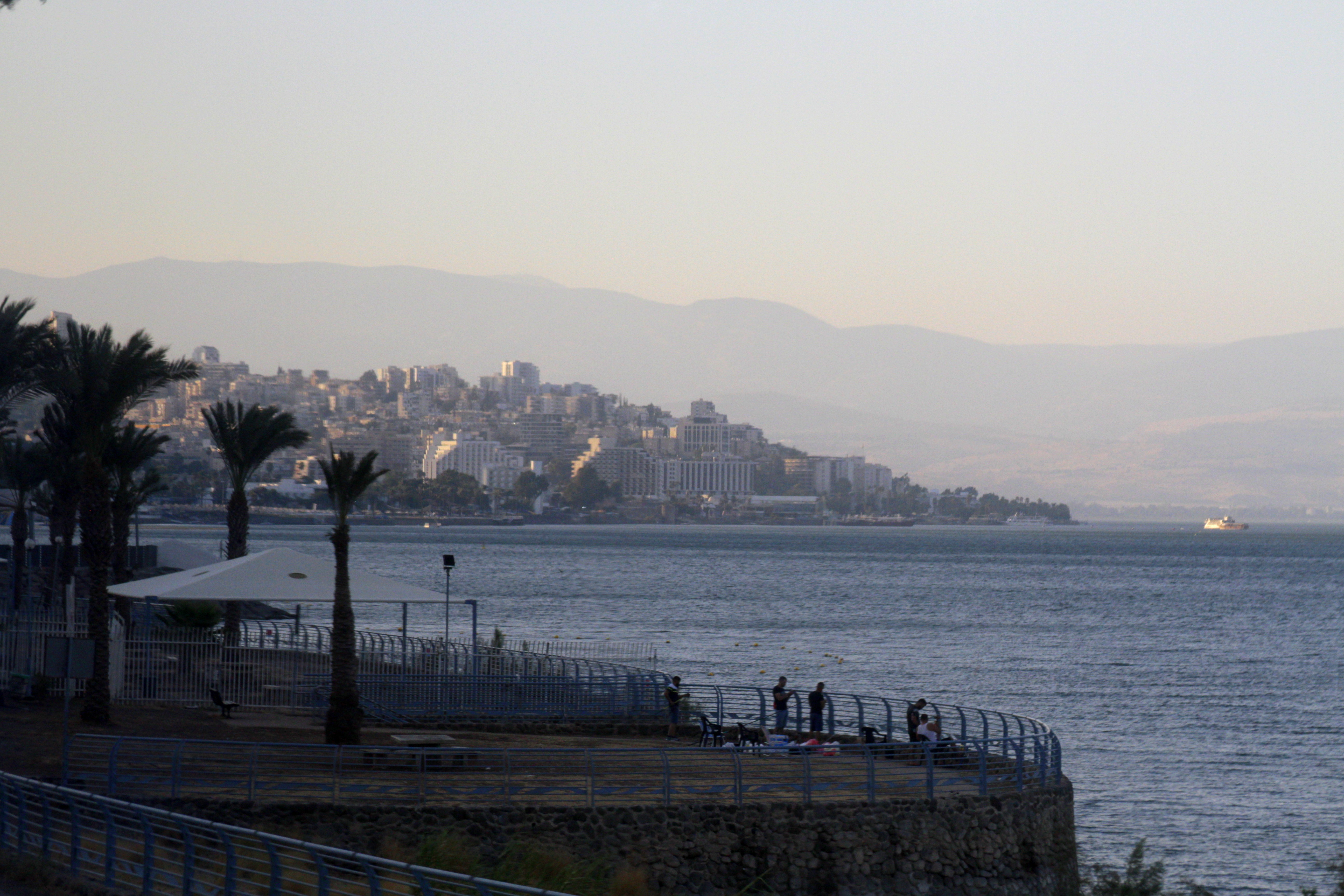
Today commenced with another stunning sunrise over the Sea of Galilee. As I stood on my balcony capturing the sunrise on my camera, the word 'shalom' came to mind. The Hebrew idea of peace, harmony, wholeness and tranquility was all wrapped up in those few peaceful moments at the break of day.

Deep peace of the running wave to you

Deep peace of the flowing air to you
Deep peace of the quiet earth to you
Deep peace of the shining stars to you
Deep peace of the gentle night to you
Moon and stars pour their healing light on you
Deep peace of Christ, of Christ
The Light of the world to you
Deep Peace of Christ to you. 
(Gaelic Blessing)

From the tranquility of the sunrise, we drove up to the top of Mount Tabor, the place where the Orthodox and Catholics believe the Transfiguration of Christ took place. The Franciscans have built a magnificent church on top of the mountain to commemorate this significant event. The church has three chapels, one for each of the people depicted in this story - a side chapel for Moses and another for Elijah, and the main chapel/church for the transfigured Christ. Each space displays magnificent artwork telling the story that appears in the synoptic gospels. The view of the Jezreel Valley from the church is truly breath taking! It's not hard to understand why Peter got caught up in the awe and wonder of what was happening.


We then moved from one mountain to another called the Mount of Beatitudes where Jesus gave the 'Sermon on the Mount.'

"Blessed are the poor in spirit, for theirs is the kingdom of heaven.
Blessed are those who mourn, for they will be comforted.
Blessed are the meek, for they will inherit the earth.
Blessed are those who hunger and thirst for righteousness, 
for they will be filled.
Blessed are the merciful, for they will be shown mercy.
Blessed are the pure in heart, for they will see God.
Blessed are the peacemakers, for they will be called children of God.
Blessed are those who are persecuted because of righteousness, 
for theirs is the kingdom of heaven.
Blessed are you when people insult you, 
persecute you and falsely say all kinds of evil against you because of me.
Rejoice and be glad, because great is your reward in heaven, for in the same way they persecuted the prophets who were before you." (Matthew 5:3-12)

Standing on the edge of the u-shaped valley looking down towards the Sea of Galilee from the top of the hillside was an extraordinary connection with the sermon that ushered in new kingdom values that literally changed the known world at the time and every generation since. I must confess that I felt a deeper connection with the 'Beatitudes' outside than inside the church dedicated to this occasion in Jesus' ministry.

From the hillside to the seaside...

Out on the waters of the Sea of Galilee we paused for a service and commenced with the song by Catherine Baird, 'When Jesus Looked O'er Galilee.' We were then guided through a series of biblical reflections from the following Scriptures:

  1. Calling His Disciples (Luke 5:1-11) - There is nothing to fear!
  2. Calming the Storm (Luke 8:22-25) - Why can't you trust me?
  3. Courage for Fear (Matthew 14:22-33) - Courage! My life is now hidden in Christ.
  4. Called Again (John 21:1-13) - Expose my hidden wounds, deal with me that I may find healing.
  5. Commissioned (John 21:15-19) - He knows all things, everything I do has love for Him as the foundation.


After sailing on a replica 'Jesus Boat', we visited an actual 2,000 year old Galilean boat that was discovered on the shores of the Sea of Galilee, buried in the sand back in 1986 by two local fishermen. The story about the process to recover this artifact was quite extraordinary! It is on display at the 'Yigal Allon Centre' and is a remarkable piece of biblical history that helps you to picture the stories of Jesus and the disciples out on the Sea of Galilee.

Our final stop for the day was a visit to the 'Duc In Altum' in Magdala. This centre dedicated to Mary Magdalene and other significant women in the gospels houses four mosaic chapels:

  1. Mary Magdalene Chapel (Luke 8:2)
  2. Walking on Water Chapel (Matthew 14:30-31)
  3. Daughter of Jairus Chapel (Mark 5:41)
  4. Fishers of Men Chapel (Matthew 4:19)

It also houses the most extraordinary boat shaped altar and the Encounter Chapel that is modeled after the structure of the Magdala first century synagogue. Outside this beautiful modern facility are the amazingly preserved ruins of the first century Magdala Synagogue, which was discovered in 2009, as well as other ruins of first century homes. The whole site, in fact city of Magdala, was of particular interest to me as I find the story of Mary Magdalene quite inspiring. However, today I was deeply disappointed and somewhat amazed that our guide perpetuated the false and defamatory narrative that Mary Magdalene was a prostitute! She was no such thing!! Rather, a wealthy woman who was tormented by seven demons, which Jesus cast out of her. Mary, along with two other women of significant influence form the same region became faithful followers of Jesus and used their wealth to support His ministry. The prostitute narrative is a Catholic tradition based on the false idea that Mary Magdalene was the 'sinful' woman who anointed Jesus with perfume and washed His feet with her tears and hair in the pharisee's home.


Saturday, September 14, 2019

Holy Land Pilgrimage Journal (Day 3)

Saturday, 14th September 2019


Travelling into Nazareth took us into the place where Jesus was raised as the son of Joseph and Mary. An ordinary place where an ordinary Jewish boy grew up with an extraordinary calling and purpose for His life. As we travelled through the streets of Nazareth, I connected with our belief that Jesus was "truly and properly man." His humanity came alive as we ventured into the marketplaces, walked past carpentry shops and saw a glimpse of the world Jesus grew up in.

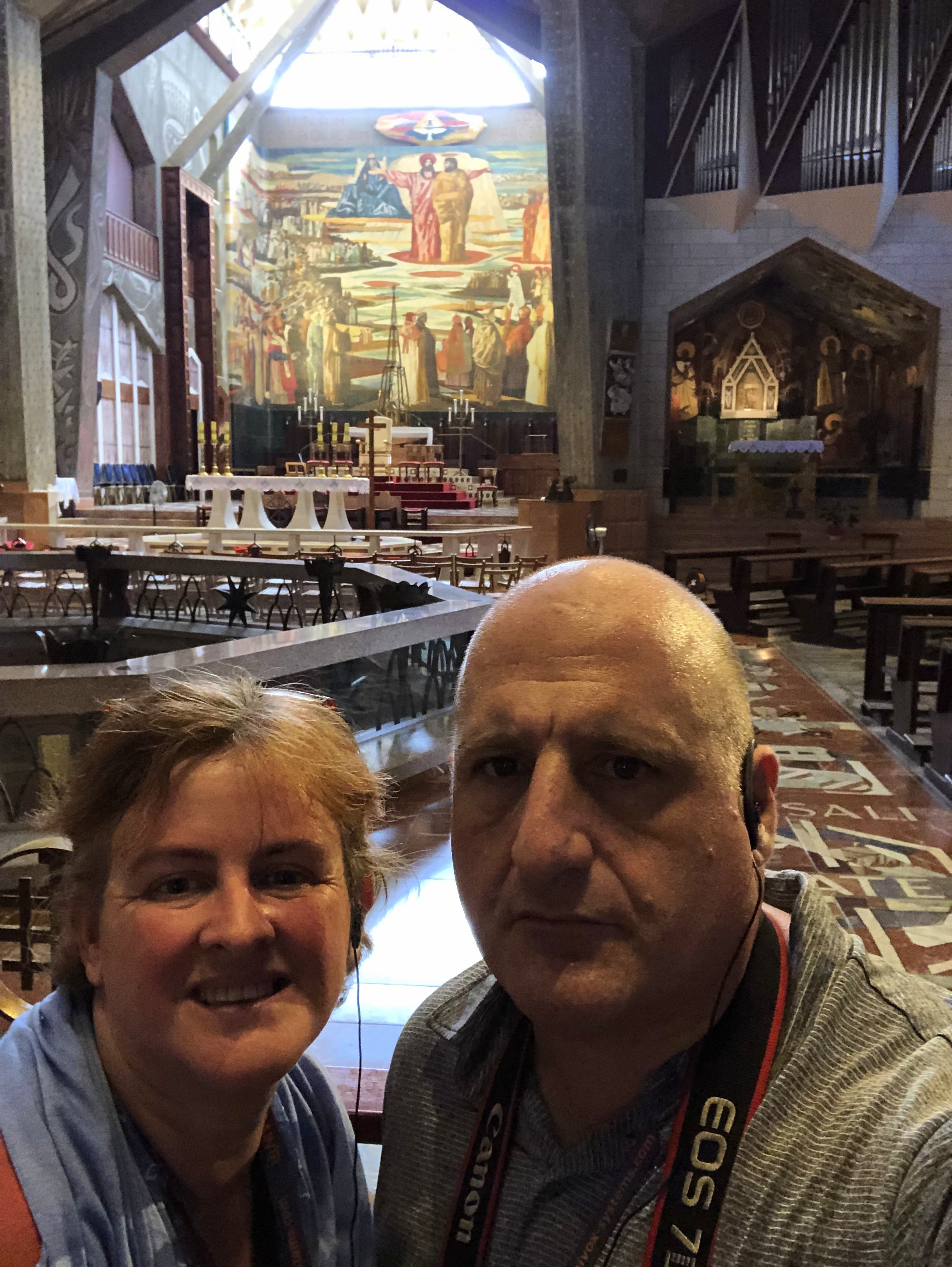
Then, when we visited the old Church of the Annunciation and the Basilica of the Annunciation, these ordinary scenes of Jewish life gave way to elaborate scenes that confronted you with awe-inspiring images of the divinity of Jesus Christ. This was captured by stunning murals and mosaics that depicted when the angel of the Lord appeared to Mary. While Protestant Christians do not venerate Mary in the same way the Catholics do, the Basilica was an impressive tribute to an amazing Jewish girl who carried the Son of God.

From the ornate churches, we returned to the ordinary reality of village life that took us back in time to an ancient Nazareth village. This recreation of a first-century village really did bring to life the reality of this Galilean village. Every detail was captured in the architecture, agriculture and activities depicted in the village. It was quite an extraordinary walk back through time that gave me a sense of presence in the life of Jesus.

"And came and lived in a city called Nazareth. This was what was written by the prophets, "He shall be called a Nazarene."" (Matthew 2:23)

"Nathanael said to him, "can any good thing come out of Nazareth?" Philip said to him, "Come and see."" (John 1:46)

Next stop, Cana - the place of the wedding supper where Jesus turned water into wine. The Franciscans have built St. Nathaniel's Chapel over this site which now is used to conduct the renewal of marriage vows for visiting couples. Yet, as meaningful as this is, the significance of the first recorded miracle of Jesus seems to get overshadowed. It certainly felt that way for me. This was further accentuated by the beautiful imagery of St. Francis of Assisi that adorned the chapel and grounds. I left this location with very mixed feelings today.

The final location we visited today had the most profound impact on me! We travelled to the northwest shore of the Sea of Galilee where Peter was reinstated by Jesus after his denial of Christ. Here the words of Jesus, "Do you love me?" spoke powerfully to me. We stood on the shore of Galilee and sang the words of Howard Davies' song, "Lord, you know that we love you." This was a most fitting song for a very sacred moment. Three rocks shaped as love hearts imbedded into the ground nearby added to the impact of the moment. As we sang the final verse, I was overwhelmed with such deep emotion, I could no longer sing but could only allow Christ to speak through the singing of the rest of our tour group...

"Lord, you know that we fail you;

Our sins, how sorely they grieve you!

Many times we have fallen,

Lord, lift us up again.

May we walk to be worthy

Of the call that is ours,

May your will and your purpose

Claim our undivided powers!"

Following this powerful moment, I went and stood in the Sea of Galilee and allowed Christ's deep, deep love for me flood my soul.

Friday, September 13, 2019

Holy Land Pilgrimage Journal (Day 2)

Friday, 13th September 2019


Upon leaving the airport in Jordan, we were immediately confronted with a dry and barren land with a distinct ancient Palestinian feel, as we drove through the capital Amman. From the limestone architecture to the olive and fig trees lining the roads, you felt a real connection with the land that Jesus would have travelled and the people He would have met along the way. The rocky ground, dry soil and rolling hills bare of vegetation, the Jordanian countryside had an ancient, rugged beauty. Yet, against this backdrop, the stain of modernity littered the countryside in much the same way that the stain of sin litters our lives.

The highlight of this part of our journey was a visit to the Greco-Roman ruins of Jerash. These are the most well-preserved ruins in Jordan that display the nexus of Greek culture and Roman infrastructure in a Palestinian world. I was particularly captured by the Agora, a bustling meeting place where people gathered to discuss philosophy and to buy and sell in the marketplace. Walking through these ruins was an extraordinary step back in time.

Crossing the border into Israel was a stark contrast to Jordan. The rocky, barren land gave way to rich, fertile soil. The banks of the Jordan River became lush with vegetation and to my surprise, eucalyptus trees that were imported from Australia. The pomegranates, olives and figs that lined the street stalls diversified into greenhouses full of bananas, mangos and other subtropical plantations. Then, as the Jordan River reached the Sea of Galilee, the land and the city of Tiberius really came alive! Within kilometres of crossing the border, it was like you leaped into another part of the world, and even, period of time.


Thursday, September 12, 2019

Holy Land Pilgrimage Journal (Day 1)

Thursday, 12th September 2019


As I set off on the 'Footsteps of Jesus' Holy Land tour, I find my mind turning to the powerful prayer of St Francis of Assisi that has spoken to me and challenged me many times throughout my Christian Pilgrimage:

"Most High, Glorious God

Enlighten the darkness of my heart,

and give me right faith,

certain hope, and perfect charity,

 wisdom and understanding,

Lord, that I may carry out your Holy and true command.

Amen"

In carrying out God's work in my current role, a certain degree of darkness of heart has overshadowed this work.  My prayer over this couple of weeks is that God's light (Jesus) may penetrate that darkness as I retrace His steps through the Holy Land.