Sunday, November 14, 2021

Spiritual Formation Journal - Chapter 4

Master of Transformational Development

Doing Theology in the Context of Poverty & Injustice


I must confess that after I read the unit guide for this semester, I approached the subject with a degree of reservation. The minor essay question asking to “Identify a key point of tension or difference between your ‘inherited theology’ and your emerging theology that is evolving in response to the challenges posed by your vocational calling” evoked a tension in my theological sensibilities. I struggled to connect with the notion of an ‘emerging theology that is evolving’ in response to my ‘experiences’, rather than God’s revelation. From the outset, I found my theological roots (The Salvation Army comes from a Wesleyan Methodist theological tradition) reacting to any thought that human experience is an equal or greater authority in forming a contextual theology.

I come from a theological position that there are core beliefs about God’ as revealed in Scripture, that are unchanging regardless of culture, time or experiences. Obvious examples include: Authority of the Scriptures, Monotheistic God, Trinitarian God, Divine & Human natures of Christ, Salvation through Christ alone, etc. So, to encounter Stephen Bevans as the first reading for the semester, who places experience above revelation, only fuelled my reservations about the subject. The author’s explanation of ‘contextual theology’ made me incredibly nervous, especially if the "experience of the present" is at odds morally, ethically or spiritually with the "experience of the past". I wrestled with the question, “If there is space for “self-theologising” to be included in Henry Venn’s 3-Selves model for indigenous churches, then, how do we genuinely invite and include a “new agenda, new methods, new voices, new dialogue” (Bevans, 2009, p. 13) without losing biblical integrity in arriving at and applying a contextual theology?

However, throughout the reading period the breadth of readings and diversity of thought on the subject balanced Bevans’ views with an understanding of contextual theology which “leads us to the realization that the fundamental transformation that must take place is not the transformation of an ancient message into a contemporary meaning but rather the transformation of our lives by means of God’s Word” (Segura-Guzman, 2010, p. 130). The other authors and our cohort discussions enabled me to engage with contextual theology, not as a threat to biblical truth, but as an endeavour to allow God’s voice to speak through other cultural contexts in a way that will provide a contextual revelation from within their respective cultures and life situations. I was reminded of previous undergraduate study where I encountered authors like Clark Pinnock who affirmed, “We do not affirm the possibility of God’s revealing himself outside Christianity begrudgingly - we welcome it! Not only does such a possibility suggest bridges in other cultures to enhance mission, but it also allows us to hear the word of God from others and deepens our own understanding of revelation” (Pinnock, 2015, p. 208).

The subject also provided an excellent reference point for retrospective reflection on interfaith dialogue I had with leaders from the Ahmadiyyah Muslim Community and Afghan Muslim asylum seekers in my previous appointment. It has given me new language and fresh understanding for these conversations where I felt theologically way out of my depth at the time. It also has affirmed, that despite my inadequacies, the Holy Spirit was clearly present and guiding this dialogue and I was simply joining in on a conversation that had already begun.

In my current vocational context, navigating a course for The Salvation Army as still a relatively new mission in the Solomon Islands has been a process of discovering what this movement needs to look like in this cultural context. The major essay has allowed me to apply the learning of this semester into a culturally specific challenge that could open the door for future mission and ministry for The Salvation Army by engaging in critical theological reflection and application. It has contributed significantly to conversations I am currently having with local community and church leaders and I believe will provide a useful paper, not only for the Solomon Islands, but also for The Salvation Army in Papua New Guinea. Learning how to ‘do theology in the context of poverty and injustice’ in this context could not be any more relevant and timely!

Sunday, August 1, 2021

Solomon Islands District - Youth Mission Trip

Special Report written by Hudson Kwale...

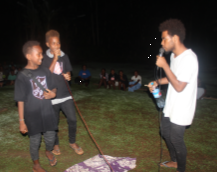
The youth program was held at Rauai Family Worship Centre in West Kwara’ae, Malaita on the 2nd to the 4th July 2021.


The name for the program was “New Things” and the Scripture was Isaiah 43:18-19. Our youth should be focused on new things that the Word of God has for us in the future, which determines our destination. It was really a weekend of blessing for our families at Rauai Village.

We experienced that our Lord has given us a chance to learn from the youth at Gateway Corps and Honiara Corps as well. We come to realize now that God has been with us throughout the years of our past life. However, we are now focusing on God’s words to reward our future. We really enjoy and learn a lot during the weekend from what the other youth put on show. It was a challenge for us.

The drama displayed to us a reality of lifestyle of today. The program helped us to be strong and caused us to put our focus on God to live as Christ Jesus, the One who hold the future for us despite our wasted past life. The program helps our spiritual life grow up one more step and thank God for keeping us to the maturity of life.

We would like to take this opportunity to thank God for His presence with us during the special weekend. We will always remember the youth mission team in our life for what they have done as we venture into the future.

We pray that God will allow us another opportunity to come together in the future. This is for our youth to feed from the Word of God. Once again, thank you very much. Looking forward to meet your youth group again in the future. God bless!


YOUTH TESTIMONIES...


Jesmah Taka (Rauai Youth Leader)

To define the theme “Do not dwell on the past” which means youth do not hold onto what had happened on the past in their lives, but to look forward to our future for new things that God will provide for us.  During the youth program held from Friday, 2nd July to Sunday, 4th July 2021 at Rauai village, the youths were really blessed and got spiritual food from our mighty man of God Pastor Wency. It also helps Rauai youth to move up next level in their lives. We experience from many good things from different youths that they came to attend the youth program with us. We do learn from them from their characters and actions that they display during the youth program.  To conclude my brief story, I would like challenge Rauai youth to follow the examples that Gateway youth from Honiara has shown us. Rauai youth is now blessed and can now feel the blessing and presence of God after the program and onward.

Jeffrey Kalia (Honiara Youth)

The program was mandated or set on Friday 2nd July 2021. We departed from Honiara at 1:00 pm in the afternoon to Auki, Malaita Province. There were 36 youth members on board in the ship to Malaita. Now we were finally grounded in Auki wharf at 5:00 pm and also board the truck on the same port. The youth arrived in Rauai village at 8:00 pm where the program was held and also location of The Salvation Army church.  On the same Friday night the program was started at 9:00 pm, and I know that there are four (4) youth groups that gathered for the program. They are as follows: Honiara youth, Gateway youth, CRC youth and the hosting youth which known as RAUAI youth. These are youths that came together for the program. During the youth camp I can see that God has done great and mighty things in the life of the young youths even the people of Rauai village and surrounding areas are also blessed by God’s Word at the camp. Indeed, that’s how you can see intervention of the Holy Spirit is in this young people on the Sunday worship at Rauai, the pastors, women and the youths are carrying; even I was filled with the presence and power of the almighty God.  Finally, but not the least, God is at work and moving power of the Holy Spirit is changing and transforming the three ex-prisoners of Rauai young men, they are no longer under the power of darkness or evil, but they are now, the sons of God and we as youth, should give honor, glory and praise back to our almighty God for what he has done in the life of these young men. Therefore, greater things are yet to come! This is the beginning of our journey with our God with more to come. God, you are great and more than enough to us. But I would like to leave one verse in the Scripture, it said ‘always give thanks to God because his love endures forever.’

Gideon Sency (Honiara Youth)

For me the youth mission to Rauai was a blessing. I have experienced God’s power moving mightily and done great things in the lives of all that attended the weekend camp. As an individual I have felt the anointing of God was upon all the young youths during our time. God transformed lives and set a new beginning for people in Rauai to abide in. Under our youth theme we carried to Rauai NEW THINGS — ”See, I am doing a new thing! Now it springs up; do you not perceive it? I am making a way in the desert and streams in the wasteland” (Isaiah 43:19).  God fulfilled His promise by making a new thing in Rauai and I see His mighty hand moving and touching the lives of each person that attended our youth camp. Souls were saved, relationships restored, and covenants were made with God.  For me, I am very happy and blessed because everything that God prepared in me for the mission. I was able to share with everyone that attend on that weekend camp and seen positive feedback which I know it does impact lives of individuals that join our weekend fellowship. To God be the glory for all the marvelous things that he has done.

Solomon Keniruahia (Honiara Youth)

Mission to Rauai was a really great opportunity for us to experience the power of the Holy Spirit and the manifestation of His Holy Spirit upon all young people of Rauai, Honaira and Gateway.  During this mission, we got a lot of experience with the young youths of Rauai, how God does transform their life from darkness to light. In addition, some of these young youths are great rascal boys, but God change them and now they have a testimony to share.  “Therefore, go and make disciples of all nations, baptizing them in the name of the Father and of the Son and of the Holy Spirit, and teaching them to obey everything I have commanded you, and surely I am with you always, to the very end of the age” (Matthew 28:19-20).  Firstly, to God be the glory, great things He has done. Through this mission God really touched my life and I’ve seen the mighty move of God in this mission to Rauai.  Secondly, young people of Rauai are really a great testimony for the people in and around Solomon Islands. God really works in their life and transforming their life and through our life they have seen and have more courage to have God in their life.  Lastly, but not the least, I just want to give all the glory and honour back to our mighty God for His provision, protection and blessing in this mission.


Regina Akwasitaloa (Gateway Youth)

The program was very good. It was well organised and we really enjoyed our time on the weekend. Physically the environment was good, which we enjoyed our time in sharing with other youths at Rauai. And spiritually the program really impacts great things in our lives!  As the theme ‘New Things’ in Isaiah 43:19-20 and the sessions organised for the weekend were successful, which we really appreciate the sermon from the servants of the Lord. Their main emphasis was for us to watch for the great things that God is going to do in our lives, rather than dwelling in the past. So, we really blessed by the Word of God throughout the weekend.  In addition to that the prayer chain organised was also successful, which throughout Saturday night we prayed continuously until morning. This brought great impact in the lives of the youths as well.  And during Sunday night, which was our social night, it was a great time where every youth really enjoyed the items presented from each youth. As from the Gateway Youth we really enjoyed our time on the weekend. We were really blessed with the Word of God through the changes that we experienced in our lives and it’s a blessing for us in our journey with our God. So, the youth program was successful. God bless us all.


Saturday, May 22, 2021

Spiritual Formation Journal - Chapter 3

Master of Transformational Development

Economics, Development & Human Flourishing


One of the biblical themes interwoven throughout this semester is the Hebrew idea of ‘shalom’ that depicts a state of holistic well-being. Studying the extent to which modern economic systems and structures contribute to a state of shalom has been a new challenge for me as I have reflected on the impact of our DME Coconut Oil Plant and the recent diplomatic switch from Taiwan to China in Solomon Islands. From the micro to the macro, it has been an interesting journey considering the impact of ‘development’ or lack of development on the well-being of communities from within my cultural context.

The Salvation Army has a long history of alleviating human suffering by demonstrating the love of Jesus Christ in practical ways. It is this mission intent that drives our social enterprise at one of our remote village churches in an endeavour to raise the standard of living and generate a sustainable income to resource our mission in the Solomon Islands. However, a quote from the reading “Reclaiming our Future: The Vision of Jubilee” has challenged the scope of my mission intentions to consider the space of shalom from another cultural perspective.

“Throughout the Torah and the economic teachings of Jesus, shalom is valued as more important to human happiness than a constantly rising standard of living” (Goudzwaard, p 183).

Remote villages have a unique rhythm of life that incorporates social and cultural values that are more centred upon maintaining a complex network of relationships than facilitating production and profitability. These relationships define daily routines, use of land and livelihood activities. To an outsider, these relationships may appear to get in the way of development when significant social and cultural events take precedence over everything else. For a task and results orientated person like me, this is something I can easily misinterpret as a cultural weakness when relationally driven disruptions compromise development initiatives. But are these ‘disruptions’ the actual point of development? Is development the servant or the master? Who defines what development looks like and its ultimate purpose? How does development promote shalom in village life? These are just some of the questions I have been pondering this semester.

I have visited a number of villages over the past three years and each time has been something of a soul-restoring experience. There is a simplicity and synergy in the rhythm of village life that reconnects you with what really matters. Yet, I find myself frustrated by the very thing that rejuvenates me. Despite the organic beauty, my cultural conditioning still sees a deficit in village life that appears to limit the development possibilities that could improve living conditions, provide education and create employment opportunities. How does one respond to such a tension? I can push harder to try and manufacture a state of shalom as a cultural outsider or I can sit with the tension long enough to discover what a state of shalom looks like for cultural insiders. I suspect this kind of relational enquiry would go a long way to answer the questions I have been pondering about the nature of development in a Solomon Islands village context. I also suspect that it may even reframe my own sense of well-being to be a little less result driven and a little more relationship orientated.

When Jesus said, “I have come that they may have life, and have it to the full” (John 10:10), He did so knowing what fullness of life looks like in a Kingdom culture, despite the prevailing Greco-Roman culture of His day. His sense of shalom was not defined by the dominant cultures but cast a counter-cultural vision for “a way of life that is best of all” (1 Corinthians 12:31b, NLT). Navigating the space between two cultures as Christ followers challenges us to assume a posture of humility to look beyond our own cultural ways to discover a revelation of ‘Christ in culture’ (Niebuhr 1951) to experience a deeper sense of shalom as fellow citizens of the Kingdom of God. Translating this into my role as the District Officer of The Salvation Army in the Solomon Islands invites a different approach to development. It opens the door to a mutual exploration of social enterprises and other mission endeavours that seek to find what a Kingdom-orientated fullness of life might look like in specific cultural contexts. Guiding a community towards a clear picture of a preferred reality would provide a basis for transformational development where success is measured by the degree to which it contributes to human flourishing in the village.

Monday, November 9, 2020

Spiritual Formation Journal - Chapter 2

Master of Transformational Development

Biblical Justice, Human Rights & Advocacy


At the beginning of this year, The Salvation Army began operating a DME (Direct Micro Expelling) Coconut Oil Plant at one of our churches in North Malaita to provide local jobs in the surrounding villages and generate a sustainable income to fund our mission in the Solomon Islands. While setting up this project, I encountered a number of challenges along the way with the ‘here and now’ mindset of local opportunists attempting to exploit money out of The Salvation Army during the construction of the plant. After months of perseverance and strong leadership, we were up and running. Then in July, I received a phone call to say that our generator had been stolen from the plant by some disgruntled workers who felt they weren’t being paid enough money for their work. While trying to retrieve our generator from the known thieves, they extorted $2,500 SBD from the plant manager for its return. Dealing with this matter at the beginning of the semester was an interesting alignment of circumstances, given the subject matter I was studying at the same time as responding to this situation.

My indignation at the initial theft and subsequent extortion evoked a reaction that leant more towards a form of ‘retributive justice’ than ‘restorative justice’ with little tolerance shown for the cultural thinking driving this behaviour. I was determined to ‘lay down the law’ (so to speak) about what was acceptable behaviour at the plant, which included an uncompromising declaration that the boys responsible would never work for The Salvation Army again, even if the money they took was repaid. The motive behind this hard-line was intended to challenge cultural thinking that has a long history of sabotaging development in North Malaita and to prevent similar attitudes from disrupting the operation of our social enterprise and mission in the future. However, during my follow-up visit to the plant in October my position on handling this matter began to soften after all the reading I had being doing about biblical justice. In particular, during the long journey to North Malaita, I began reading “Compassionate Justice” by Christopher D Marshall, which deeply challenged me with a vision of restorative justice. Marshall’s brilliant exposition of the parable of the Good Samaritan exposed a legalistic spirit within me and caused me to examine who really is my neighbour in the context of this situation. His lens of compassion broadened my expectations of restoration to be more than the recovery of stolen money and the resumption of production, but also a pathway of restoration for those who had wronged the community.

Marshall wrote, “If it is to flourish, then, restorative justice must be anchored in alternative “communities of value,” that is, in communities of people who accord the highest importance to the values of mutual care and accountability, honesty and compassion, confession and forgiveness, and peacemaking” (Marshall 2012, loc. 283). The values highlighted in this statement, which are at the heart of the ethos and mission of The Salvation Army, are better achieved when we “administer true justice; show mercy and compassion to one another” (Zechariah 5:9). This change of posture and pathway of restoration led to a powerful moment on my final night in the village when the boys responsible for the theft approached me one by one to apologise for their actions, after making a commitment to repay the money they stole from the plant.

This situation was not only a significant leadership challenge but a confronting spiritual challenge for me as my investigation and handling of the theft had turned inward to self-examination of my own sense of justice and righteousness. Initially, my compassion and desire for justice centred on those who had been wronged by having their source of income disrupted, which included both the village and The Salvation Army. By extending to the offenders the same compassion and restorative justice my response was reorientated more towards grace than legalism. My reorientated response also had an impact on the local church leaders, who were caught in the tension between their feelings of anger and shame towards the behaviour of the boys and their sense of responsibility for them as members of their community. Culturally, retributive justice is normal with ‘compensation’ being the Solomon Islands way to right wrongs. Community reconciliation only ever occurs after the payment of compensation, which can include cash, shell money, fresh produce and pigs. While seeking compensation beyond the return of what was stolen was never a consideration in my dealing with this matter, the offer of restoration with no demand for compensation was a powerful counter-cultural experience for this church. Who knows, maybe my personal transformation in this space may cast a vision for community transformation in North Malaita?

Wednesday, July 1, 2020

Solomon Islands District - Cyclone Harold Disaster Relief

On the 1st April 2020, a tropical low formed off the east coast of PNG and was classified as a tropical cyclone over Solomon Islands waters the next day. As tropical Cyclone Harold passed by Gaudalcanal Province it caused significant damage along the coastline to low-lying communities. In Honiara, strong winds damaged properties along the seafront and heavy rain flooded food crops planted along riverbanks.


One of the communities impacted by Cyclone Harold was Burns Creek, a Settlement in East Honiara where the Honiara Corps Officers reside. Burns Creek is a very vulnerable community with a history of social unrest and is a known hot spot for crime. When the community leaders from Burns Creek approached The Salvation Army for assistance, there was a feeling of helplessness and desperation driving their request. The community leaders were deeply concerned about food security and the potential for illegal activity to emerge out of concern for how their people were going to feed their families. This concern was exacerbated by the impact of the COVID-19 State of Public Emergency that shut down satellite markets around Honiara.

At the time of receiving this request, I was contacted by a colleague in Tasmania who was approached by a humanitarian organization called ‘The Obed Centre’ that had raised some money for Cyclone Harold victims. While discussing the potential allocation of these funds with The Salvation Army International Emergency Services (IES), I was made aware of the Rapid Response Grant that could also help with this request for assistance. After navigating the application process we were able to offer a substantial amount of relief to the Burns Creek leaders, which would support 790 families across 16 communities. Given the social concerns surrounding this crisis in Burns Creek, I approached the RSIPF National Crime Prevention Department (NCPD) and invited them to partner with us in the distribution of our disaster relief. This partnership provided very generous support with transportation through the use of two 3 tonne trucks and the opportunity for the RSIPF to conduct crime prevention talks alongside our SAES personnel.

Through the donation received from ‘The Obed Centre’, we were able to purchase 3,500 cassava stems from local farmers to help replace lost food crops. The funds from the IES Rapid Response Grant enabled us to purchase enough rice and tuna to feed the 790 families for three weeks while they replanted their gardens, with the generous support of Soltuna who donated 100 cartons of tuna and Solrice who donated two pallets of rice towards our relief strategy. Starting on Tuesday, 16th June, our SAES team, together with the NCPD, distributed a weekly allocation of rice and tuna to each community in Burns Creek for the three week period. The community response was quite overwhelming, with a number of very kind expressions of appreciation received by our team from grateful community leaders. The opportunity to work alongside the NCPD was a real blessing that built on the relationship we established with the RSIPF during the National General Election last year. This partnership had a real impact on those who normally see the police as the enemy in their law enforcement role. Instead, they saw them working alongside a church in a community service role that genuinely cared for their well-being.

This disaster relief program provided our SAES volunteers with another opportunity to demonstrate a practical expression of Christ’s love at a time of need. Our volunteers worked hard and enthusiastically engaged with this community in a way that has laid the foundation for future mission and ministry opportunities. In fact, during our last week of distribution, one community leader pointed out a section of his land saying he would like to build a church for The Salvation Army to commence services alongside his home. This practical expression of faith had a powerful impact on each community and church we visited in Burns Creek, as our assistance was given without discrimination or expectation of anything in return. We were simply happy to bless these people regardless of their church affiliation. Any future ministry that emerges will do so naturally and will be pursued in relationship with the other churches already active in Burns Creek.

We are very grateful to the IES for their funding, The Obed Centre for their donation, Solrice and Soltuna for their generous support and to the RSIPF for their partnership. I also want to acknowledge Envoy Wency Ramo’oroa for his liaison and coordination role with community leaders.

Wednesday, May 13, 2020

Spiritual Formation Journal - Chapter 1

Master of Transformational Development

Climate Change, Justice & Sustainability


Since December 2017, together with my wife Vanessa, we have been serving in the Solomon Islands as the District Officers in charge of The Salvation Army. During this time I have been on a journey of learning and discovery that has challenged my cultural values, strengthened my faith and opened extraordinary opportunities for mission.

The Solomon Islands is a country consisting of over 900 islands and a population of around 650,000 people with 92% professing a Christian faith. Christian values are clearly evident in every area of life with prayer and worship being central activities, not only in the churches but also in the public and political arenas. Every public meeting or event I attend, secular and sacred, is opened in prayer. Every village has a church that is central to community life and pastors hold more influence among indigenous people than politicians. In this context, being a Christian leader with responsibilities in both ecclesial and community work has a very different feel to Australia. As a Salvation Army Officer in Australia, when networking among secular organisations I encounter polarised responses to my ministry as a church pastor and my mission as a community welfare worker. Government, business and community leaders are more than happy to support our community work, but shy away from anything related to the church. This is a challenging space when your social and spiritual mission is integrated. However, Solomon Islands offers a very different space that enables me to freely interact with indigenous leaders who see Christian faith as an integral part of life without the dualism imposed by Australian secular culture. In fact, I have found that the integration of the spiritual and social mission of The Salvation Army, often expressed as ‘heart to God, hand to man’, resonates strongly with many Solomon Islanders who want the church to be more than a worshipping community. While I have never been shy in sharing my faith, there is a freedom of expression here that is liberating when interacting with people of influence and seeking their support for our ‘whole’ mission.

Yet, underneath this hyper-spiritual environment that projects a façade of Christendom, is a deeply entrenched culture of corruption, along with multi-layers of social evils that strains the credibility of this Christian nation in the eyes of international observers. Whether it is domestic violence, gender injustice or environmental degradation, the lack of alignment between faith and life gives false witness to the Christ this nation serves. Therefore, networking beyond religious indigenous leaders with secular expats and international NGO’s presents a number of faith challenges. On one hand there is a growing recognition that working with churches is essential to effective program implementation, on the other hand they look upon Christianity as ineffective, superstitious and even destructive. I get a sense from a number of external agencies that churches are tolerated as a means to an ends rather than an actual vehicle of community transformation. I have always held to the view that “the local church is the hope of the world” (Bill Hybels), in so far as it is the manifestation of Christ’s mission today. Regrettably, external observers do not see this manifestation of Christ in ways that brings hope and healing to a nation crippled by its own form of dualism that contradicts any aspiration of integrated mission. As I interact socially with High Commission, NGO, AFP, and ADF personnel, I am confronted with scepticism and resistance because of the stark incongruity of belief and behaviour. Fortunately, their respect for The Salvation Army allows me to engage in dialogue that ventures into this contentious faith space. I was recently introduced to the new Defence Advisor for South West Pacific, whose opening greeting to me was, “I’m not interested in your religion. As long as you understand that, we’ll get along fine.” I discovered that his rejection of anything ‘religious’ comes from years of military service where he has seen horrendous things done by people who profess faith in God or Allah. This includes having previously served in the Solomon Islands during the ‘Tensions’ where civil and ethnic unrest brought down the government and led to a period of total lawlessness in this Christian nation.

I see my challenge and role in this space including discipling indigenous Salvation Army leaders in Holiness so that their faith and life intersect in a way that transforms their worship from singing nice songs on Sunday, to living Christlike on Monday. And casting a transforming vision of Christianity to external networks that demonstrates how integrating faith into community life can bring belief and behaviour into alignment so that kingdom values transcend cultural values. This begins with an honest and humble acknowledgment of the current state of faith and culture by local Christian leaders and a call to lament and repentance for what has previously been done in Christ’s name. The Salvation Army is a relatively new church movement in this country with an international reputation that uniquely places us to respond to these faith challenges.

Wednesday, March 25, 2020

Solomon Islands District - Climate Change

Master of Transformation Presentation 

"Climate Change in the Solomon Islands"

Presented by Major Robert Evans at Eastern College Australia


OVERVIEW


According to the Tourism Solomons website…

"The Solomon Islands are an archipelago of 992 tropical islands and atolls, scattered in a gentle curve. They comprise two major parallel island chains extending some 1800 kilometres from the Shortland Islands in the west to Tikopia and Anuta in the east. Situated in the South Pacific between Papua New Guinea and Vanuatu, the population of about 550,000 is predominantly Melanesian but includes other smaller groups. Exotic local customs and traditions remain a very important part of life for Solomon Islanders. The islands and waters are still a little-known pristine paradise. They are particularly special for their remarkable biodiversity, containing thousands of different plant and animal species, especially the marine life. Many species are known only to the Solomons."

Entrenched within this “pristine paradise” is a sub-culture of environmental degradation that confronts visitors to the Solomon Islands the moment they enter the capital Honiara, whether by air or by sea. The plastic waste that spews out of open storm water drains outside the Rove Bulkshop, the blood-red betel nut spit that stain the walls of the underpass near Honiara Central Market, the disposable nappies and empty tuna tins that spoil the underwater view for snorkelers at Mbonege Beach, the rusted broken down logging equipment that lines the banks of the Poha River, the rubbish that is indiscriminately thrown overboard the Fair Lady into the Iron Bottom Sound by local travellers throughout the five hour voyage to Auki, and the unregulated logging tracks that are carved into the rolling hills of West Guadalcanal, are some of the evidence that environmental awareness and creation care is far from the consciousness of the average Solomon Islander. Such disregard for the environment by the indigenous population seriously compromises the “remarkable biodiversity” that has sustained the Melanesian “exotic local customs and traditions” for generations. In addition to this internal lack of environmental concern is the unsustainable pillaging of natural resources by foreign investors that goes largely unchecked by government authorities who seem to show little regard for long-term environmental impact.

Against this background of self-inflicted environmental degradation, the vulnerability of this “archipelago of 992 tropical islands and atolls” is compounded by ‘Climate change’, leaving the Solomon Islands ill-prepared to effectively mitigate or adapt to the increasing effects of this global crisis. Saltwater intrusion along Fanalei Island, intensifying tropical storms across Temotu and Renbell provinces, invasion of Coconut Rhinoceros Beetles around Guadalcanal, coastal erosion along the North Road in Malaita, are among the many climatic challenges confronting the Solomon Islands.

While living in Honiara and leading the growth and development of The Salvation Army throughout the Solomon Islands for the past two years I have had the opportunity to observe first-hand the issues outlined above and to speak with people from all walks of life about ‘climate change’ and the impact it is having on everyday life. From farmers and fishermen in remote villages to the Permanent Secretary for Environment, Climate Change, Disaster Management & Meteorology, their stories from lived experience are much the same, despite gaps between their knowledge about the science and scope of ‘climate change’. Using the CEDRA Strategic Process as a template, this brief report will highlight some of these stories, discuss what The Salvation Army is currently doing in this space and reflect upon how churches may be more proactive in embracing ‘Creation Care’ as an integral part of their mission activity in the Solomon Islands.


STEP 1 - MAPPING


STEP 2 - SCIENCE


1.  Tsunami 2007

“On 3rd April 2007 at approximately 07:40 local time, an earthquake measuring 8.2 on the Richter Scale occurred in the Western Province of the Solomon Islands, just off the coast of the main island of Gizo.  Fifteen minutes later, an additional eight earthquakes of slightly smaller magnitude triggered a localised tsunami.  Several islands in the Solomon’s chain suffered both quake and tsunami damage (in particular to low-lying seaside areas).  In Gizo town, the provincial capital, the local Solomon Islands Red Cross said that at least 13 people had been reported dead in Gizo.  Around 2,000 people (about 10% of the population) were made homeless, and there had been widespread damage to infrastructure.  Initial reports indicate similar, or worse, levels of damage in other areas.” (https://reliefweb.int/report/solomon-islands/solomons-islands-tsunami-2007, Solomon Islands Tsunami 2007, Australian Red Cross, published 3rd April 2007)

2.  Tropical Depressions

According to Dr Melchior Mataki, Permanent Secretary for Environment, Climate Change, Disaster Management & Meteorology in the Solomon Island, the historic location for severe tropical storms has extended beyond Renbell, Temotu and Makira Provinces across all provinces in the Solomon Islands over the past 10 years.  The data is indicating that tropical depressions are now behaving like tropical cyclones with intensified and unpredictable wind and rain causing the most damage, as these tropical low pressure systems linger over the islands for longer periods of time and with greater intensity (before being classified as a cyclone).  This results in widespread flooding and destructive winds in areas previously untouched by cyclones. (Interview conducted by Major Robert Evans with Dr Melchior Mataki on Friday, 28th February 2020)

3.  Rising Sea Levels

“Marie Schlenker a PhD student within the Energy and Climate Change Research Group at the University of Southampton is researching the impact of climate change and coastal hazards on the Solomon Islands.  Her research focuses on the analysis of physical data to gain insights into climate change impacts in the Solomon Islands. She uses satellite images, aerial photographs and beach surveys to understand how shorelines of small islands have changed in the past and how they might evolve in a changing climate. However, Marie also added a significant social science component to her work. During her two-months long fieldtrip to the Solomon Islands, she conducted interviews and participatory workshops with local people to learn more about their perceptions of climate change and its impacts on coastal areas in the country.”

“Many coastal communities in the Solomon Islands are already experiencing adverse impacts of environmental change, including severe shoreline erosion and increased flooding frequency. The villages of Walande and Fanalei in South Malaita are two examples that show how coastal change might result in community relocations, associated with severe social implications. Low cash income, strong dependence on natural resources and disputes over land ownership have complicated relocation for the communities of Walande and Fanalei. One finding of Marie’s research is that climate change impacts in the Solomon Islands can only be understood within the unique cultural context, encompassing tribal land tenure, traditional customs and the wantok system.” (https://www.southampton.ac.uk/oes/news/2019/12/13-solomon-islands-study.page, Ocean and Earth Science, National Oceanography Centre Southhampton, Solomon Islands study: how local communities are being impacted by climate change and coastal hazards, published 13th December 2019)

4.  Logging

“Globally, remaining tropical forests are being rapidly cleared, particularly in countries like the Solomon Islands where commercial logging accounts for about 18 percent of government revenue, and at least 60 percent of exports while providing the largest number of formal sector jobs.  However, the loss of native forests has huge ecological and social consequences, many of which are poorly documented.  A team of researchers from The University of Queensland (UQ), Wildlife Conservation Society (WCS), and other groups have found that increasing land clearing for logging in Solomon Islands – even with best management strategies in place -- will lead to unsustainable levels of soil erosion and significant impacts to downstream water quality.  Combined, these impacts will compromise the integrity of the land for future agricultural uses, interrupt access to clean drinking water and degrade important downstream ecosystems.” (https://www.sciencedaily.com/releases/2018/04/180416142448.htm, Logging in tropical forests jeopardizing drinking water, Wildlife Conservation Society, published 16th April 2018)

5.  Coconut Rhinoceros Beetle

“The coconut rhinoceros beetle (CRB), Oryctes rhinoceros, was discovered in Honiara in January 2015. A delimiting survey was carried out and plans made for the introduction of the fungus Metarhizium anisoplae and Baculovirus oryctes. The outbreak is focussed in residential areas of Honiara but symptoms have been reported in palms several kilometres east and west of Honiara. To date there are no confirmed reports of the beetle on any other island in the country.  CRB is a serious pest of palms elsewhere. Coconuts are a significant crop for Solomon Islands both for food and export, oil palm is also a significant export revenue earner. Uncontrolled attacks by O. rhinoceros will have important effects on both these industries.  CRB adults damage palms by boring into the centre of the crown, where they injure the young, growing tissues and feed on the exuded sap. As they bore into the crown, they cut through the developing leaves. When the leaves grow out and unfold, the damage appears as V-shaped cuts in the fronds or holes through the midrib.” (http://www.biosecurity.gov.sb/News-Resources/coconut-rhinoceros-beetle, published 18th April 2016)


STEP 3 - COMMUNITY


Story from Western Province
In response to the 2007 earthquake and tsunami in the Western Province, The Salvation Army Papua New Guinea Territory donated and delivered a recovery housing project with 15 new houses, constructed by Pacific Builders, to Paeloge tsunami victims in 2009, at a cost of SB$1.3 million.  Recent conversations with local Salvation Army members who have wantok in Gizo reveal that many of these houses that were constructed on higher ground have since been disassembled and rebuilt back on traditional coastal land.  The relocation for many of these families caused an unintended economic impact for the village due to fiscal displacement.  Many of them rely on fishing for their livelihood and the risk of being closer to the shoreline is more preferable than a long daily walk to catch and store fish. 


Visit to North Malaita
To visit our congregation on Suafa Bay in North Malaita, I frequently embark on the long and unconfortable six hour drive up the North Road from Auki on the back of a three tonne public truck.  About two hours out from my destination the North Road hugs the coastline, which shows clear evidence of coastal erosion where waves lap up against the edge of the gravel road.  Along this journey there are also a number of precarious river crossings.  Many of the bridges are in a dangerous state of disrepair, causing truck drivers to divert through rivers when the water is low at some crossings.  As recently as two weeks ago, the Taba River bridge (two river crossings before our church) collapsed as a result of flood waters, leaving people in North Malaita cut-off from the main port in Auki.  This impacts access to the main market, affecting our ability to transport the coconut oil we are producing at our DME Coconut Oil Plant.

Visit to South Malaita
While visiting a new mission opportunity in Fouele Village in South Malaita last year, I witnessed first-hand the well-documented reality of rising sea levels on Fanalei Island across the bay.  As our ship docked on the Fanalei beach, we were confronted with a long row of large steel containers full of rocks positioned to hold back the high tide from the remaining village homes.  Village leader Chris Sukufatu was the first family to migrate across to Fouele from Fanalei around 30 years ago as the sea began washing away community buildings in the village.  I asked Chris how local people understood or interpreted what was happening before they heard the language of ‘climate change’.  He said they used the term “Bio” [bee-oh], which means in their Lau language – “beyond normal current of water”, which brought the expectation that something bigger was coming.  Before Christianity came to the island locals believed this was an ‘act of the spirits’ who were not happy with them because they defied natural laws or committed some sin.

Living in Honiara
Among the many environmental issues associated with logging in West Guadalcanal is the perpetual impact it is having on the water supply for the 65,000+ residents living in Honiara.  Every time it rains in the catchment areas, debris from the logging camps flows down the rivers causing a high level of ‘turbidity’ that clogs the pipes and damages the pumps.  As a consequence, Solomon Water turn off the vulnerable pumps after rainfall to protect the infrastructure, which leaves large portions of the city without mains water for up to two days at a time.  These shut-downs occur at least twice a week during the wet season, leaving residents who don’t have water tanks (which are generally only installed in expat homes) without access to clean water.  Major services like the National Referral Hospital and the Royal Solomon Islands Police Force Headquarters are frequently impacted and are left without water when their tanks run out.

Spread of Coconut Rhinoceros Beetle (CRB)
The data presented in the previous section from a 2015 report suggested there was no evidence of the CRB in other provinces at that time.  Today, the damage to coconut palms caused by the CRB can be seen clearly along the North Road while travelling through West Kwara’ae in the Malaita Province.  The tops of once fruitful coconut palms have been reduced to a few straggly palm fronds, which has effectively destroyed the productivity of these plantations.  In East Guadalcanal, experts from New Zealand have identified significant breeding grounds for the CRB larve among rotting logs, saw dust, and compost, especially within the Guadalcanal Palm Oil plantations where a lot of organic waste lies after harvesting.  The Biosecurity Emergency Coordination Centre has mobilised clean-up teams throughout Guadalcanal to destroy known breeding areas and are facilitating public education campaigns in Honiara and surrounding villages.


STEP 4 - RISK


Risk assessment and management is not a natural way of thinking in the Solomon Islands.  A ‘here and now’ mindset tends to focus on the needs of today with very little regard or thought for tomorrow.  This adds another layer of vulnerability for individuals and community leaders who are often exploited in this space by quick fix promises or offers of cash that diverts concern about managing risk associated with climate change or environmental degradation away from long-term mitigation or adaptation projects.  For example:

  • Asian logging companies will offer landowners in the outer villages timber to build their house in exchange for permission to log their land.  The allure of a more permanent home than a leaf hut overshadows any potential degradation of the land that produces their food or the river that supplies their water and washes their children.  It also blinds them to the possibility of landslides or flooding that inevitably follows the mass clearing of vegetation.  During the tropical depression over Guadalcanal two weeks ago, a landslide below one of these logging camps destroyed a local village, killing eight Solomon Islanders!
  • The promise to pay school fees or provide roofing iron by MP’s contesting the National General Election last year enticed thousands of voters from rural constituencies to register to vote in Honiara.  This diverted Rural Constituency Development Funds into election campaigns instead of necessary community development projects in the constituencies where they are most needed.  It also left unfulfilled promises to repair essential infrastructure like schools and bridges in the rural areas.
  • The current construction of a large shopping plaza on a bend along the Lunga River in East Honiara, immediately adjacent to the bridge, is an example of promised economic benefits superseding a sound risk assessment of a site that was devastated by the 2014 flash floods in Honiara.  This massive structure is literally right on the river edge where the river rose up to its ground floor during the most recent tropical disturbance.  There is ‘suggested’ evidence that normal planning approvals were bypassed, and a risk assessment of the river conducted by the National Disaster Management Office after the flash floods in 2014 was ignored.  This is literally a disaster waiting to happen!

With these examples in mind, it is hard to image remote communities that are living day to day with very little access to external resources or support giving much time or consideration to a risk assessment of the long-term effects of climate change on their villages and livelihoods until it is too late.  There seems to be more of a reactive than proactive approach in the Solomon Islands that depends upon being rescued rather than being prepared.

The current global outbreak of Coronavirus has external agencies and authorities working diligently to try and manage the risk of the virus hitting our shores.  While there is cooperation by the appropriate internal government departments, external pressure from the recent diplomatic partnership with China is compromising the safety of local citizens by the emergency safety measures being overridden by key business and diplomatic leaders who are driven by the needs of the ‘here and now’.


STEP 5 - ADAPTATION


What is The Salvation Army doing in The Solomon Islands to adapt to the changing environment?

1.  Partnership with Kokonut Pacific Solomon Islands (KPSI)

The Salvation Army Solomon Islands District has partnered with KPSI to construct and manage a Direct Micro Expelling (DME) coconut oil plant in North Malaita as a part of the mission of Gateway Corps.  This plant provides an alternative process to produce organic virgin coconut oil at a village level, which is then sold back to KPSI to produce their products that are sold locally and internationally.  This social enterprise model enables us to purchase coconuts at a price that gives the farmers a higher return than if they produced copra, it provides jobs for people in the surrounding villages and generates a sustainable income to help fund the mission of The Salvation Army in the Solomon Islands.  In an industry where there has been a slump in the international market for copra (traditional method for producing oil) this partnership is helping to keep coconut plantations profitable.  Our manager captured the broader impact of our plant well while addressing our staff recently: “This plant not only provides our families an income but grants us the privilege of contributing to our national economy by processing a natural product in our village.”

2.  Support of Biosecurity Emergency Coordination Centre (BECC)

After seeing the Salvation Army Emergency Services (SAES) team in action at the National General Election last year while we were serving meals to the Royal Solomon Islands Police Force (RSIPF), a program coordinator from the BECC invited The Salvation Army to provide daily catering for their clean-up teams in Honiara.  Our assessment of this request determined that it fitted the mandate of our SAES team to provide support in times of crisis, as the infestation of this beetle is very much an ecological and economic crisis that affects the long-term income for vulnerable people.  Therefore, during October and December last year and February and March this year our SAES team has been cooking lunches daily for a crew of 16 workers involved in this clean-up project.  In addition to this catering support, our DME plant will become a staging area for the BECC training teams in North Malaita, to help educate coconut farmers how to reduce the infestation of the CRB by proper management of their plantations.


STEP 6 - REPORT


On Friday, 28th February 2020 I interviewed Dr Melchior Mataki, Permanent Secretary for Environment, Climate Change, Disaster Management & Meteorology…

Primary Impact of Climate Change in Solomon Islands
  • Low lying atolls (including artificial islands) are subject to rising sea levels
  • Intensity of extreme weather (cyclones, low pressure systems) is increasing across whole country.
  • 10 years ago the impact of tropical depressions was limited to Renbell, Temotu and Makira Provinces, now across all provinces.
  • Tropical depressions are now behaving like tropical cyclones, lingering longer and causing more damage.
  • Tropical storms are much more unpredictable.
  • Upward trend of temperature since 1950’s – less of a difference between daytime and nighttime temperatures (hotter nights).
  • Saltwater intrusion in low lying atolls is affecting drinking water and crops.
  • Saltwater intruding sub-soil fresh water supplies, which in turn affects food supplies.
  • Seasons for fruiting (mangoes etc) are changing – earlier or later harvests are impacting food supply and access to markets.
  • Insects/pests unpredictable and ever-present (microclimate).
  • Some traditional plants are no longer available in some provinces, which impacts traditional cooking methods.
  • People are experiencing shock relating to these rapid changes.
  • Coastal erosion, while a natural process, is accelerated by extreme weather.  There is a loss of 20-30 metres of land on some islands since 1980’s.  Human activities and development is also contributing to loss of land.
Other Climate Change Issues
  • Relocation is easier said than done!  80-90% of land is customarily owned.  Relocation creates conflict over ownership, stirs up social issues, impacts population growth and presents challenges in cross-cultural integration.  Other issues of land and marine resources, access and security need to be considered when considering relocation.
  • Relocation as an adaptation response is not new – people have been moving across the islands for centuries.  It’s not just about relocating the people, there is culture, heritage, fiscal assets, skills, mindset that need to be considered in relocation.
  • Need to see climate change in relation to other social and cultural issues
  • Other development needs MUST be considered alongside climate change issues, instead of isolating climate change from other development issues.
  • Role of Solomon Islands Government in Climate Change Mitigation/Adaptation 
  • Ministry portfolio established in 2011, bringing together related areas of responsibility.  Still finding his way in this role.
  • Policy and actions need to be evidence-based
  • Solomon Islands Government (SIG) policies and legislation have not kept pace with mitigation and adaptation issues.  
  • Other development needs hinder SIG response to climate change.
  • Language of climate change has been opportunistically used to apportion blame. 
  • SIG approach to climate change: 
    • Easing the pressure on the islands
    • Work with urban centres to allocate sub divisions for houses and reestablishment
    • Using economic engine of urban areas to access available services and resources
    • Prevent customary land clashes, provide respite while resolving other complicated issues
Existing/Potential Partnerships with NGO’s, Civil Societies, Churches
  • Doesn’t want people to rely entirely on SIG for mitigation and adaptation (costly exercise).
  • Self-regulated adaptation is more successful.
  • Role of churches – pastors are more influential than politicians.
  • Hasn’t really considered how the churches might be involved in this space.

STEP 7 - NEXT STEPS


Questions for further discussion and action…

  • How do we overcome a ‘here and now’ mindset that inhibits a long-term vision for mitigation and adaptation?
  • How might we shift communities from ‘waiting to be rescued’ to becoming ‘proactively prepared’?
  • What other opportunities might there be for The Salvation Army to engage in the Climate Change space in the Solomon Islands?
  • How can we effectively encourage other churches to integrate “Creation Care” into their mission and ministry?
  • What role could the churches have working alongside NGO’s and SIG?